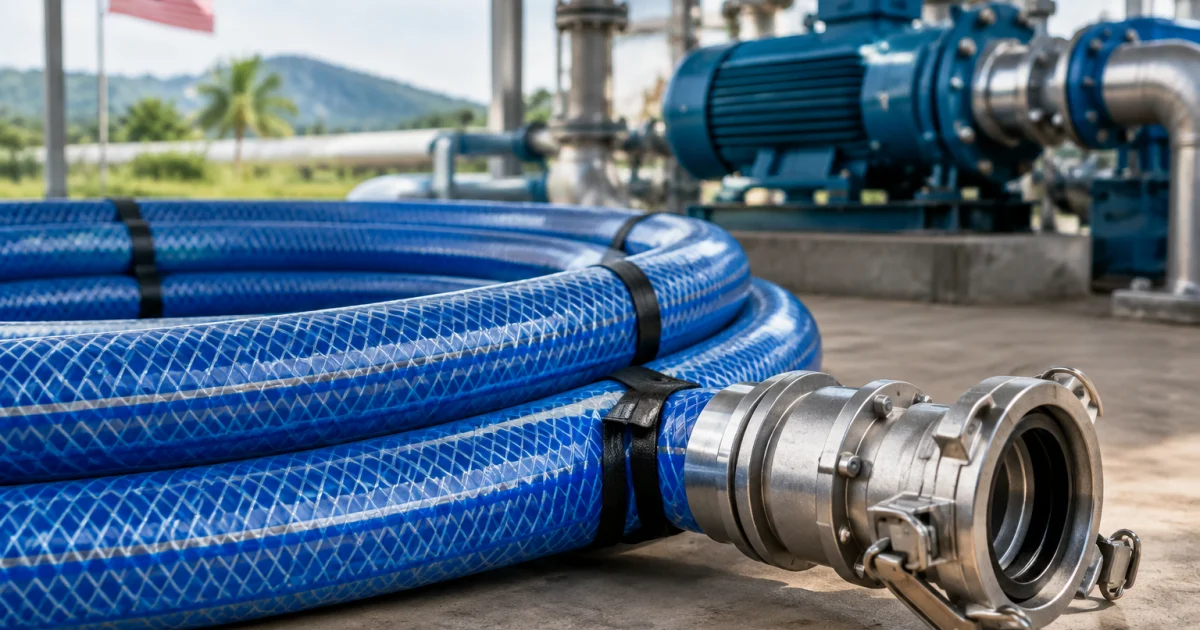
PVC High Pressure Hose Trends in 2026: Materials, Safety Expectations, and Common Industrial Applications
Engineers and maintenance teams have always had to balance hose performance, safety, availability, and cost. In 2026, that balance is shifting: plants want higher line reliability, clearer safety accountability, and simpler maintenance—especially on air and water services where “temporary” hoses become permanent. As a result, more attention is going to construction details (reinforcement, flexibility, temperature behaviour), how assemblies are built (couplings, clamps, end fittings), and how hoses are inspected and retired.
This article reviews PVC High Pressure Hose trends in 2026 with a practical lens: what’s changing in materials, what safety expectations look like on the shopfloor, and which industrial applications typically benefit from pressure-rated PVC versus other hose types. While the principles are universal, the examples are especially relevant to Malaysian plants running mixed-duty utilities—compressed air, washdown water, process skids, and general service transfer lines.
1) Materials and construction trends: “What material is it?” matters more
“What material is it?” is still a common first question, but for high-pressure PVC hoses it now means more than “PVC.” Real performance depends on:
- PVC compound formulation (flexibility, chemical resistance, clarity/opacity, ageing)
- Reinforcement type (textile braid, multi-braid, spiral reinforcement, or hybrids)
- Wall thickness and layer design (inner tube + reinforcement + outer cover)
- Manufacturing consistency (tolerances, concentricity, adhesion between layers)
In 2026, buyers are asking suppliers to specify these details because they affect pressure stability and service life. Two hoses can share the same nominal “working pressure” but behave very differently under pressure spikes, tight bends, or high ambient heat.
Reinforcement focus: braid/spiral choices and kink resistance
Reinforcement provides most of the pressure capability. A clear trend is selecting constructions that stay flexible yet resist kinking—important for moving equipment, retractable reels, and maintenance trolleys. Plants that previously used general-purpose hoses are upgrading after recurring issues such as pinhole leaks near fittings, ballooning, or failures caused by sharp bends.
Where suction/transfer is involved, “spring” constructions—such as a spring hose or PVC spring hose—are discussed more often. The embedded helix improves crush resistance and helps maintain bore shape, which can also help where routing is tight and the hose must hold its shape. The key is matching construction to the real pressure and duty cycle.
Temperature and ageing behaviour: more attention to real environments
Teams are aligning hose choice to where the hose actually lives: near compressors and dryers, around hot machinery, or outdoors in sun and rain. PVC properties change with temperature; flexibility and pressure capability can vary. That’s driving closer checks of manufacturer temperature ranges and more planned inspection (instead of “run until it leaks”).
2) Safety expectations: pressure management, assemblies, and accountability
High-pressure hoses are increasingly treated as safety-critical components, not simple consumables. In 2026, this shows up in tighter pressure management, higher assembly discipline, and more structured inspection routines—especially for blow-off, washdown, hydro tests, and utility line work.
Working pressure, burst pressure, and pressure spikes
Teams are paying closer attention to continuous working pressure versus burst pressure, and—more importantly—pressure spikes from quick-closing valves, pump cycling, compressor cut-in/cut-out, and water hammer. A hose can be “rated” on paper and still fail early if spikes are frequent or regulation is poor.
Common controls include:
- Proper regulation at the point of use (not only at the header)
- Slow-opening/closing valves where feasible to reduce shock
- Correctly sized hose ID to reduce excessive velocity and pressure drop
- Clear pressure identification on assemblies to prevent service mix-ups
Couplings, clamps, and end fittings: the assembly is part of the rating
A major realisation in 2026 is that a good hose can become a poor hose system if assembled incorrectly. Many failures happen at the ends due to wrong fitting choice, under/over-tightened clamps, poor hose cut preparation, or mismatch between hose OD/ID and coupling shank.
Maintenance teams are standardising approved coupling sets and documenting assembly methods. This includes choosing between hose tails with clamps versus crimped fittings based on pressure, media, and criticality. Where the line interfaces with ball valves, rotary joints, or quick couplers, connection quality affects leakage and unintended disconnect risk. Strain relief and proper routing also matter: avoid forcing sharp bends at the fitting and respect minimum bend radius.
Inspection and retirement: moving away from “visual-only” checks
Visual inspection remains essential, but 2026 practices are trending toward structured checks—especially for shared utility lines used by multiple operators. Typical checks include:
- Outer cover cracking, hardening, or abrasion wear-through
- Blistering or soft spots (possible layer separation)
- Bulging near fittings (possible reinforcement damage)
- Corrosion or damage on couplings/clamps
- Evidence of kinking and flattened sections
To reduce emergency callouts, more plants track when hoses enter service and set replacement criteria based on duty cycle and environment. Even simple tagging helps solve the “unknown age” problem.
3) Common industrial applications: where pressure-rated PVC fits best
Pressure-rated PVC hose remains popular because it can be lightweight, cost-effective, and versatile. The 2026 selection trend is to use it where it fits—and avoid it where high temperature, aggressive chemicals, or severe abrasion demand other materials.
Compressed air distribution and tool lines
For compressed air, teams often want hoses that stay manageable on reels and around workstations. Pressure-rated PVC is commonly used for drop lines and maintenance carts when paired with proper regulation and quality fittings. Where lines support pneumatic automation—such as cylinders, valves, and air prep units from brands like Festo—engineers are also focusing on consistent sizing and leakage control to protect performance and energy efficiency.
Water service: washdown, utility water, and general transfer
Washdown and utility water are frequent use cases. A key 2026 consideration is matching the hose to real conditions: pressure, temperature, cleaning chemicals, and handling abuse. Many teams separate “standard transfer” from “spray/jetting” duty. If spray duty is common, purpose-built products such as a dedicated High Pressure Spray Hose may be more appropriate than treating any pressure-rated hose as interchangeable.
Food and beverage: when food-grade construction is required
Food and beverage manufacturers need documentation and food-contact suitability. In 2026, there’s stronger emphasis on specifying food-grade constructions for product contact rather than relying on “clean-looking” general hoses. Selecting an appropriate PVC Reinforced Hose Food Grade can simplify compliance and reduce cross-use risk.
For suction and transfer where shape retention matters (e.g., drawing liquids from tanks or drains), spring-type constructions may be considered. Plants running frequent hygiene cycles also invest more in training: correct cleaning methods, avoiding ground contact, and capping ends during storage.
Material handling support: airflow, dust control, and flow-aid contexts
In mills and heavy industries, hoses support dust extraction, utility air for actuators, and maintenance work around conveyors and chutes. Even when high-pressure PVC isn’t required, the 2026 trend is system thinking: hoses, valves, and auxiliaries work together. For example, if plants add industrial flow aid equipment (pneumatic vibrators or air knockers) to address bridging or ratholing, dependable air supply often depends on good routing, correct line sizing, and consistent fittings.
4) Selection checklist for engineers: choosing the right hose for the job
Instead of picking by a “pressure number” alone, 2026 best practice is a checklist that clarifies duty, environment, and assembly method.
Define the service clearly
- Media: compressed air, water, mild chemicals, food product, etc.
- Temperature range: ambient plus worst-case near equipment
- Pressure profile: steady pressure vs pulsating/spikes
- Flow demand: continuous vs intermittent; required ID
Match construction to handling realities
- Flexibility vs kink resistance: tight routing needs better bend behaviour
- Abrasion exposure: floor drag, sharp edges, forklift zones
- UV/outdoor exposure: storage and weathering considerations
- Weight and ergonomics: operator fatigue and reel compatibility
Engineer the connections, not just the hose
- Fitting type: hose tail + clamps vs crimped assemblies
- Compatibility: match hose ID/OD to coupling specifications
- Valves and interfaces: ensure ball valves, quick couplers, and swivels suit the pressure and media
- Strain relief: avoid side-loading the fitting and sharp bends at the end
Plan inspection and replacement
Use a simple hose lifecycle approach: acceptance check on delivery, a quick in-service inspection routine, and clear retirement criteria. This reduces emergency downtime and helps standardise MRO stocking across departments.
5) Procurement and standardisation trends: fewer SKUs, clearer specs
Plants are simplifying procurement: fewer hose types, clearer specifications, and less risky substitution during urgent repairs. This typically includes:
- Standardised hose families for air, water, washdown, and special services
- Approved assembly standards for clamps/couplings and torque practices
- Controlled storage to prevent UV damage, deformation, or contamination
- Supplier support to confirm selection and maintain consistent supply
Where spring-style hoses are used for suction or routing stability, keeping a separate standard for Pvc Spring Hose can reduce misapplication. For pressure-rated duties, ensuring the correct product is specified (and not substituted with a general “industrial hose”) is part of the safety and reliability story.
Conclusion: better hose performance comes from better system choices
PVC high-pressure hose solutions remain common because they can deliver a practical mix of pressure capability, flexibility, and cost. The 2026 trend is less about finding one “best hose” and more about reducing uncertainty: clearer expectations for material and construction, stronger assembly discipline, and structured inspection. When engineers define service properly, match construction to handling realities, and treat fittings and valves as part of the pressure system, reliability improves and incident risk drops.
If you’re reviewing plant air and water lines, start by documenting where failures occur (often at bends and fittings) and standardise the right hose-and-connection sets for each duty. That step typically reduces downtime, leakage, and recurring replacement work.
Frequently Asked Questions
What material is a PVC high-pressure hose made from?
It’s typically made from a PVC inner tube and outer cover, with a reinforcing layer (often textile braid or spiral reinforcement) that provides the pressure capability. The exact PVC compound and reinforcement design matter—two “PVC” hoses can perform differently in flexibility, kink resistance, temperature behaviour, and service life.
Can I use a PVC high-pressure hose for compressed air lines?
Often yes, provided the hose’s working pressure and temperature range match your system, and the line is properly regulated to reduce pressure spikes. The assembly is just as important: use compatible couplings/clamps (or crimped fittings where required), avoid sharp bends at the ends, and inspect regularly for abrasion, hardening, or bulging near fittings.
What’s the difference between a spring hose and a reinforced pressure hose?
A spring hose (often a PVC spring hose) uses a helical wire or rigid spiral to help the hose hold its shape and resist collapse, which is useful for suction and tight routing. A reinforced pressure hose relies on braid/spiral reinforcement designed to contain internal pressure. Some applications need both shape retention and pressure performance, but you should confirm the pressure rating and intended duty of the specific hose construction.
Why do high-pressure hoses fail near couplings or ball valves?
Common causes include mismatch between hose size and fitting shank, incorrect clamp type or torque, poor hose cut preparation, repeated bending right at the fitting, and vibration or side-load from connected components (including ball valves and quick couplers). Using strain relief, respecting minimum bend radius, and standardising approved fitting sets can significantly reduce end failures.
How should maintenance teams inspect and replace pressure hoses?
Use routine checks for cracking, abrasion, flattening/kinks, blistering, bulges near ends, and damaged or corroded fittings. Track when a hose enters service (even simple tags help), and define retirement criteria based on duty cycle and environment—especially for hoses exposed to heat, outdoor UV, frequent pressure spikes, or harsh handling.
Need help selecting a safer hose setup for your plant?
Pusaco Industrial Supplies Sdn. Bhd. supports engineers and maintenance teams with industrial hoses, fittings, valves, and technical guidance—so your hose selection and assembly match the real pressure, routing, and duty cycle on site. If you’re standardising air and water lines, planning washdown upgrades, or troubleshooting repeated coupling leaks, our team can help you shortlist the right hose construction and connection approach.